Building date: 1841
Original use:
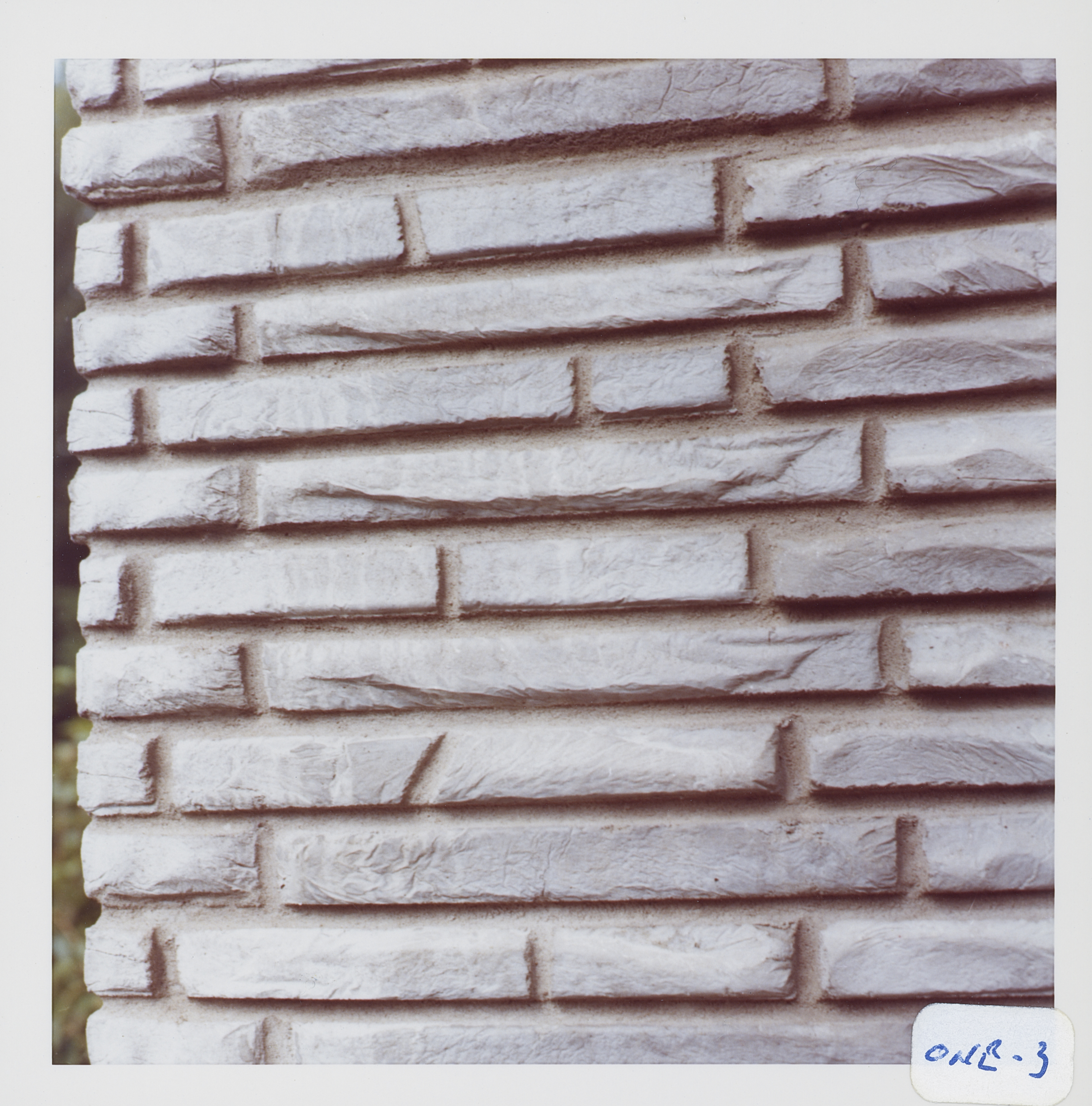
Corner structures: Cast stone Pilasters
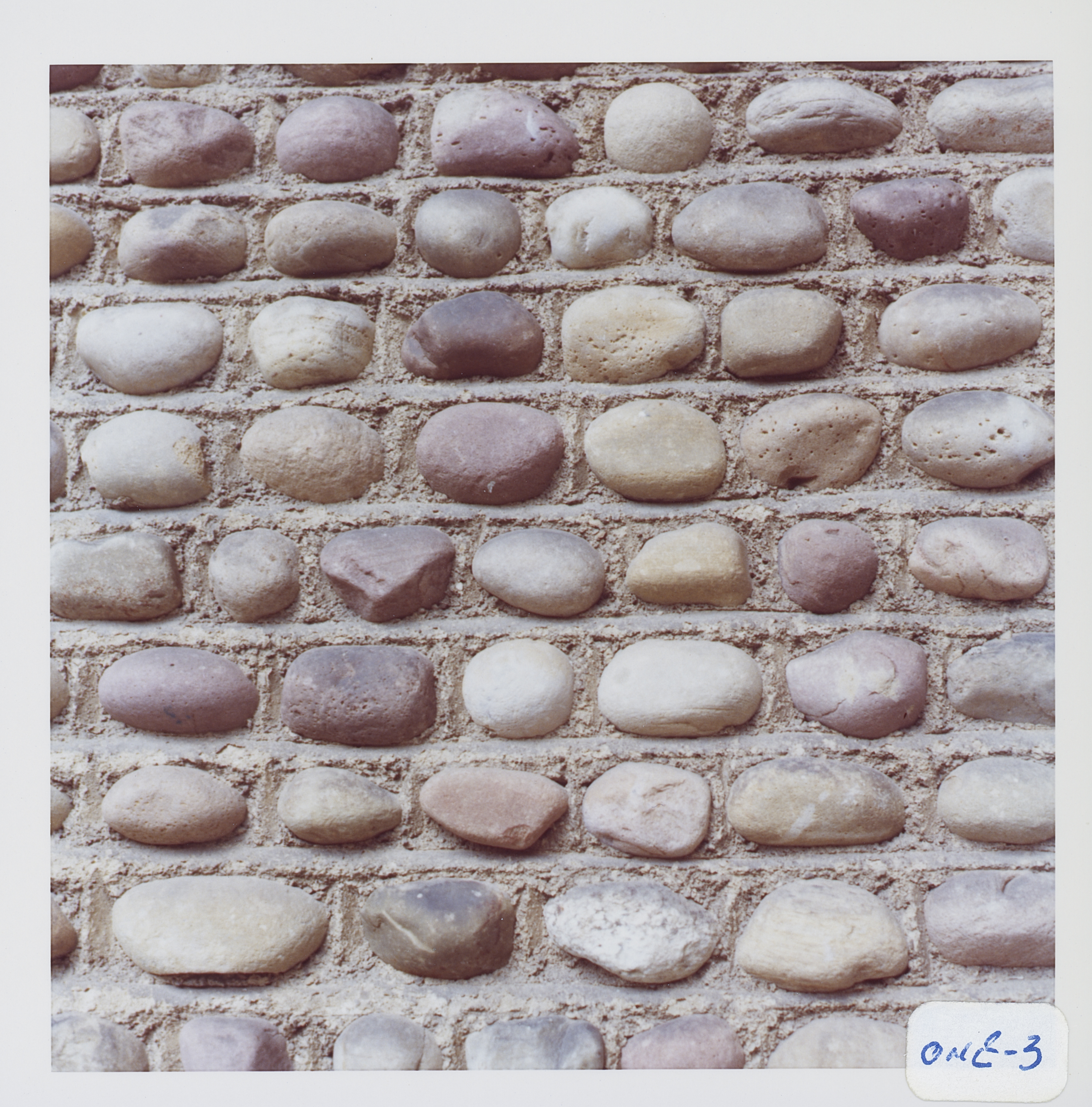
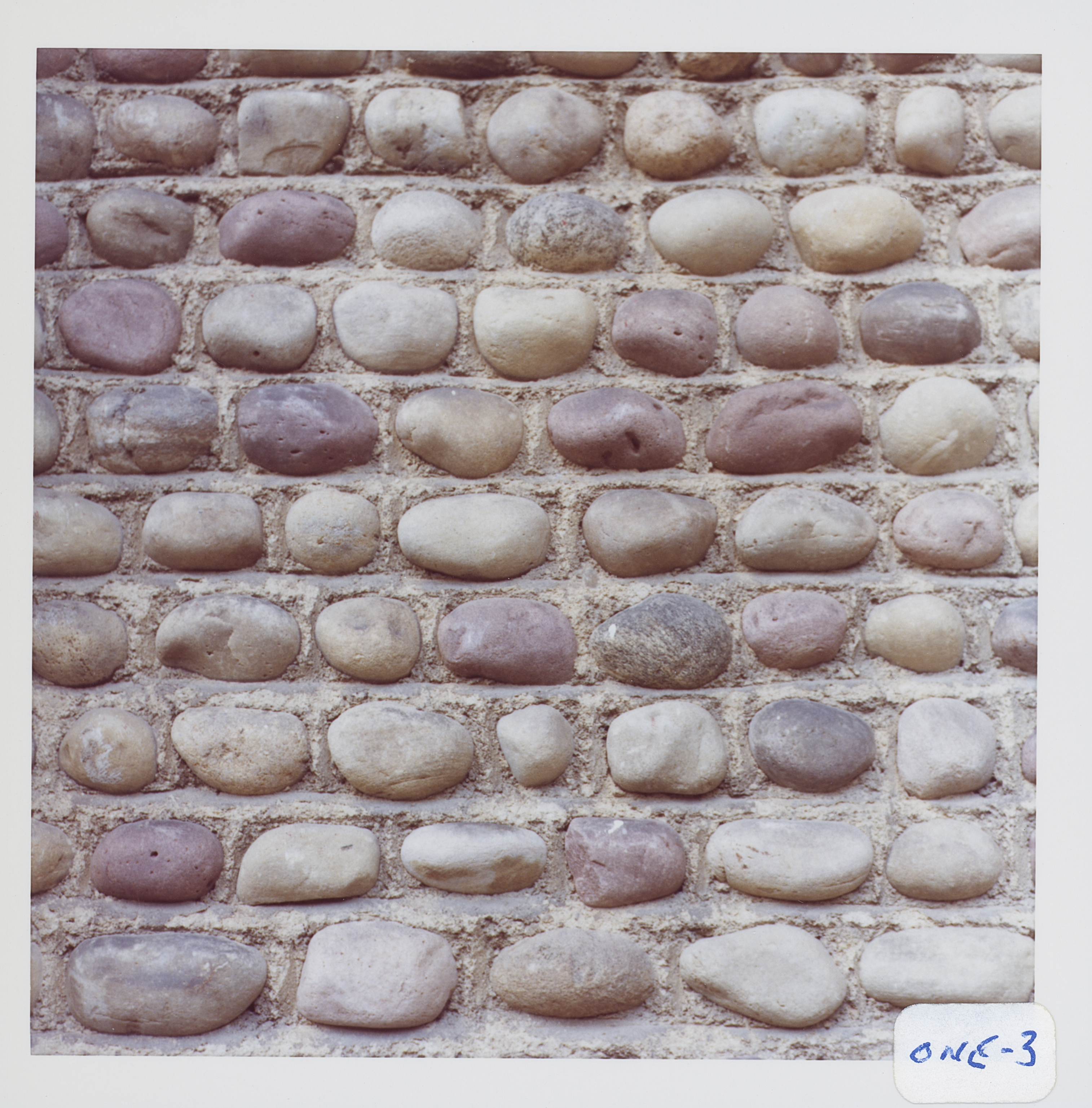
Mortar application and content: Vertical, slight embellishment
Types and uses of stones: Various colors and are smooth and rounded
Types and choice of windows: Lintels are gray limestone
Structures with similar masonry details:
Masons who worked on building: William J. Babcock
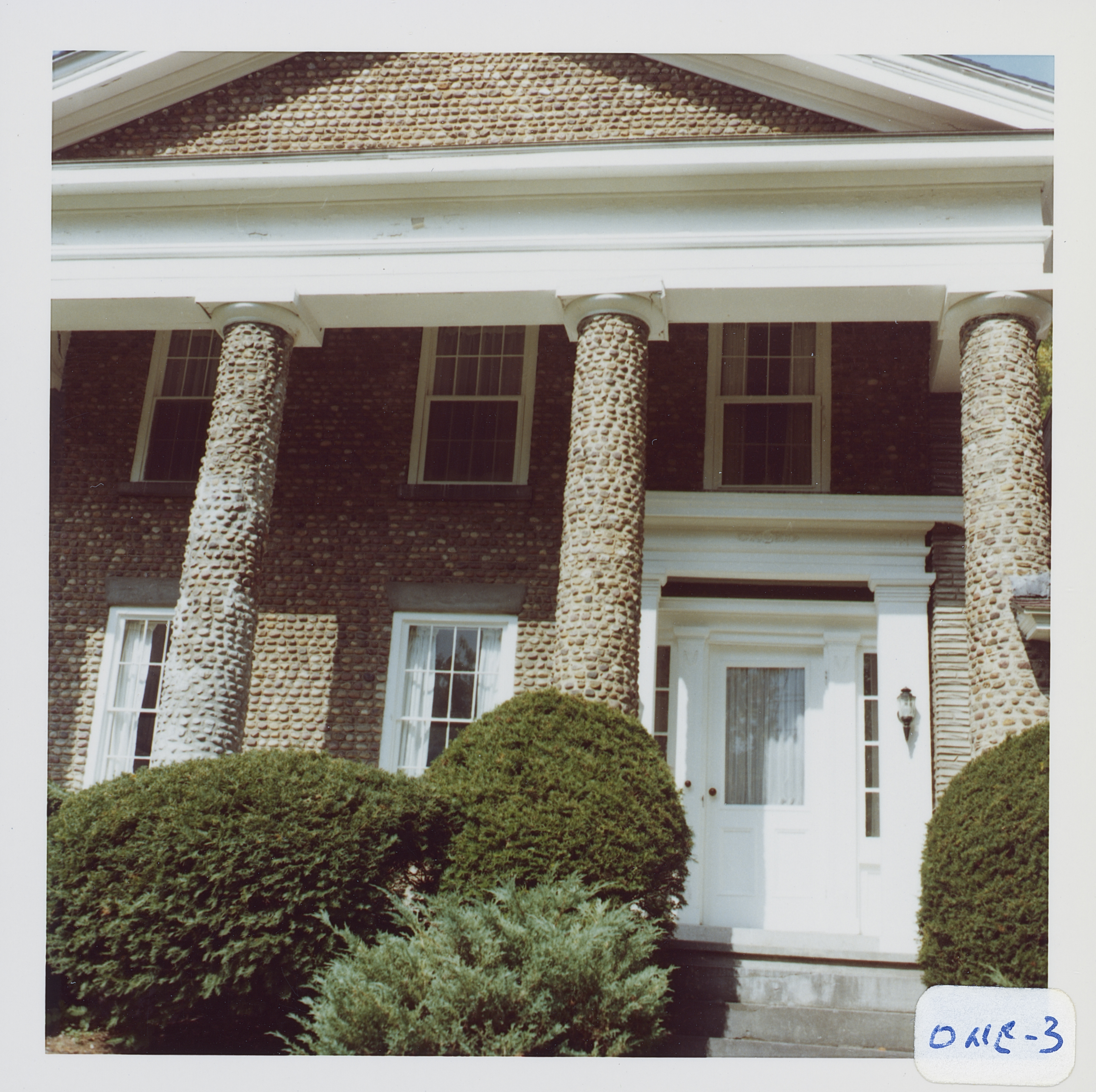
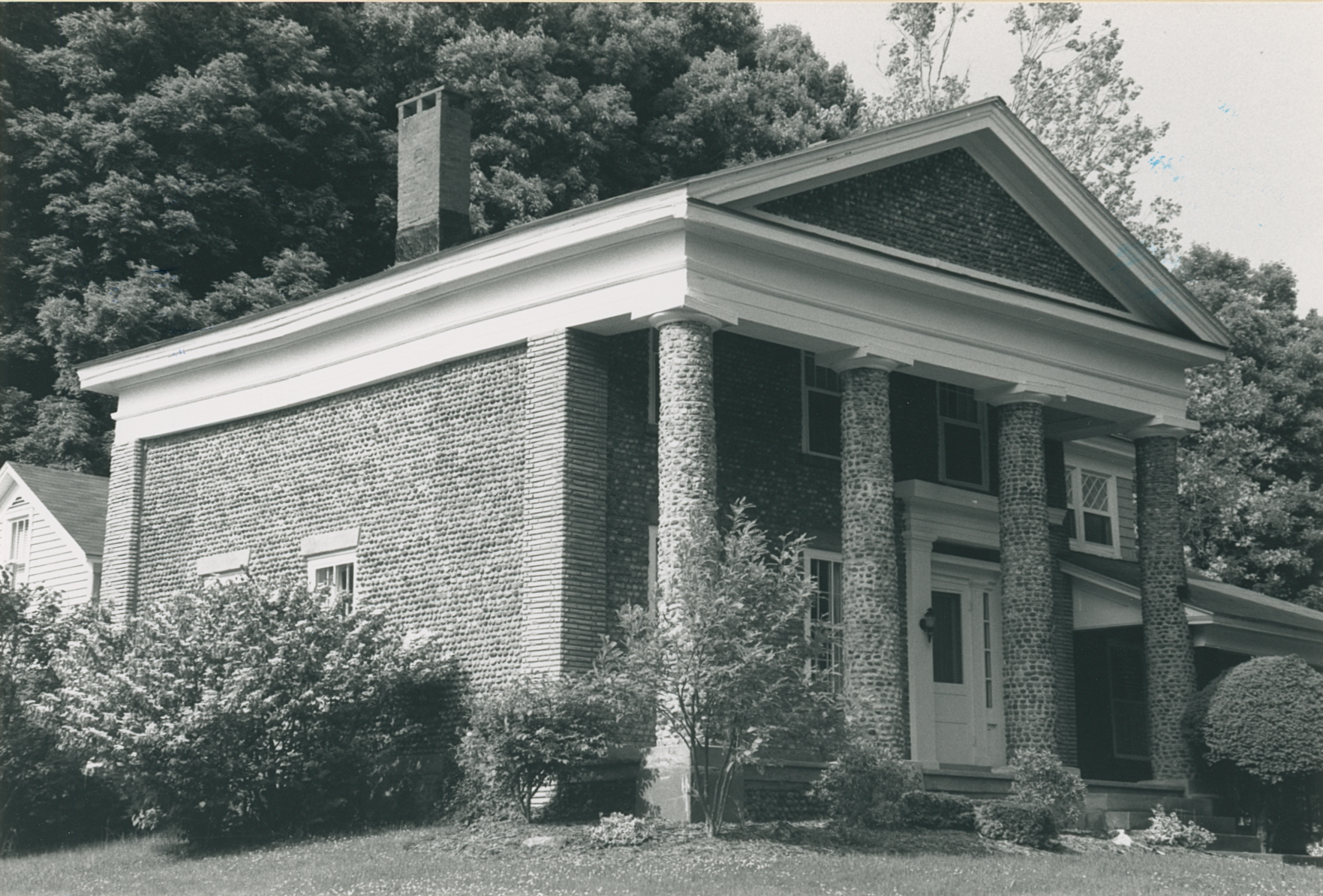
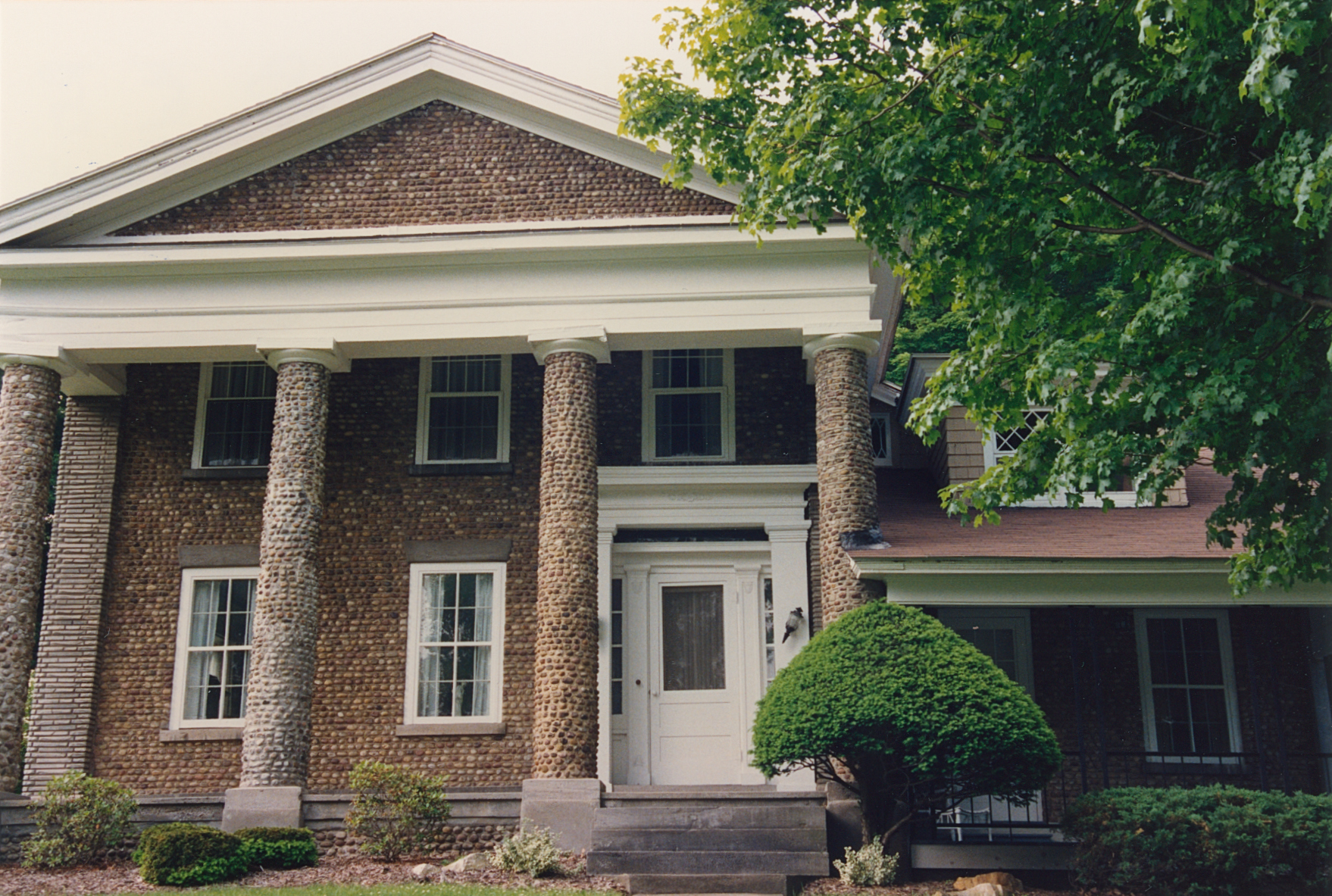
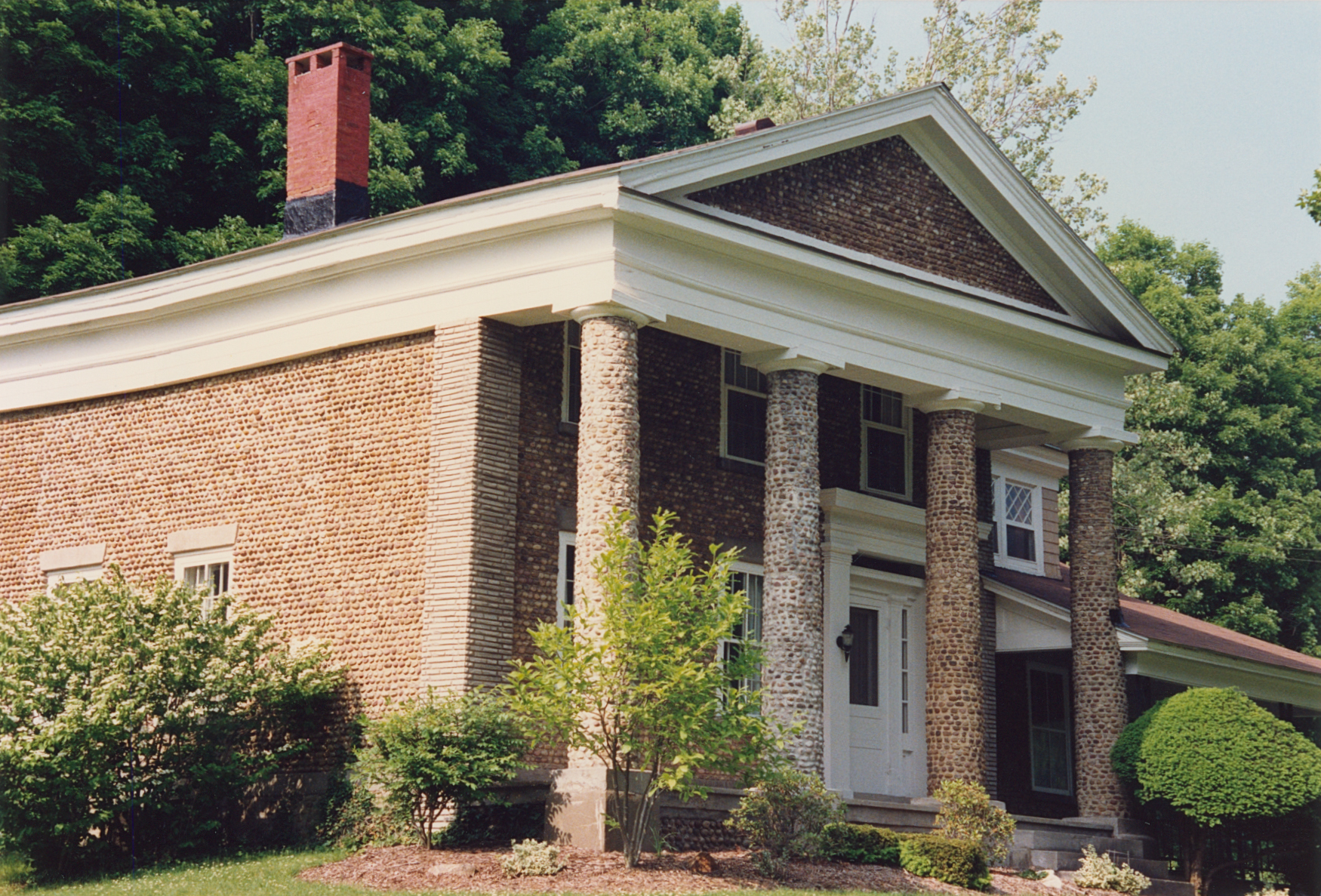
Unique features: To construct the columns that support the triangular pediment cobblestones were applied to logs.
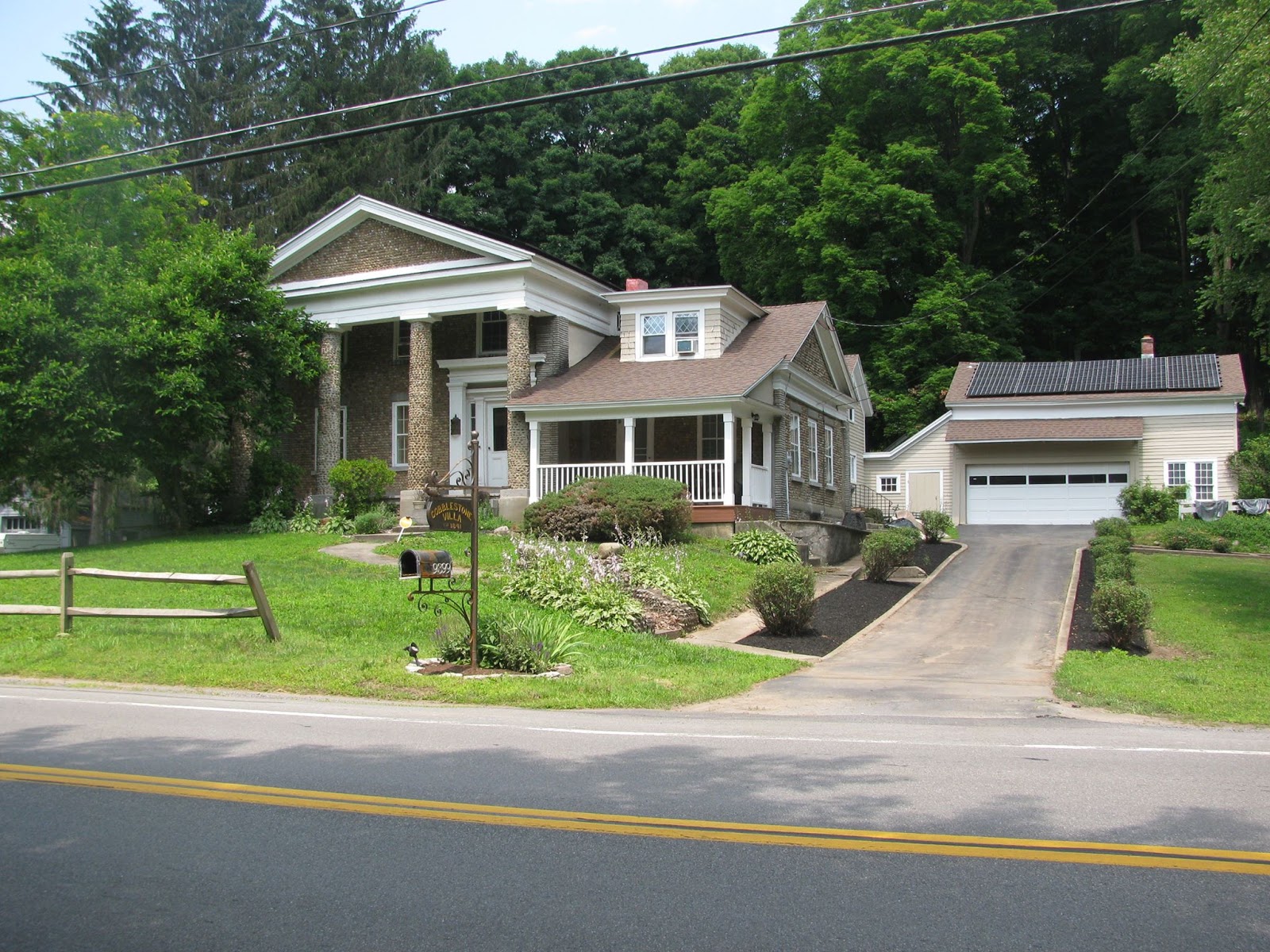
Map views courtesy Google Maps. Address is Google Earth confirmed; 43°14'21.44"N 75°15'57.42"W. Current owner of record, Rennie as of the 2018 Tax Roll.
Town of Trenton and Oneida County Maps
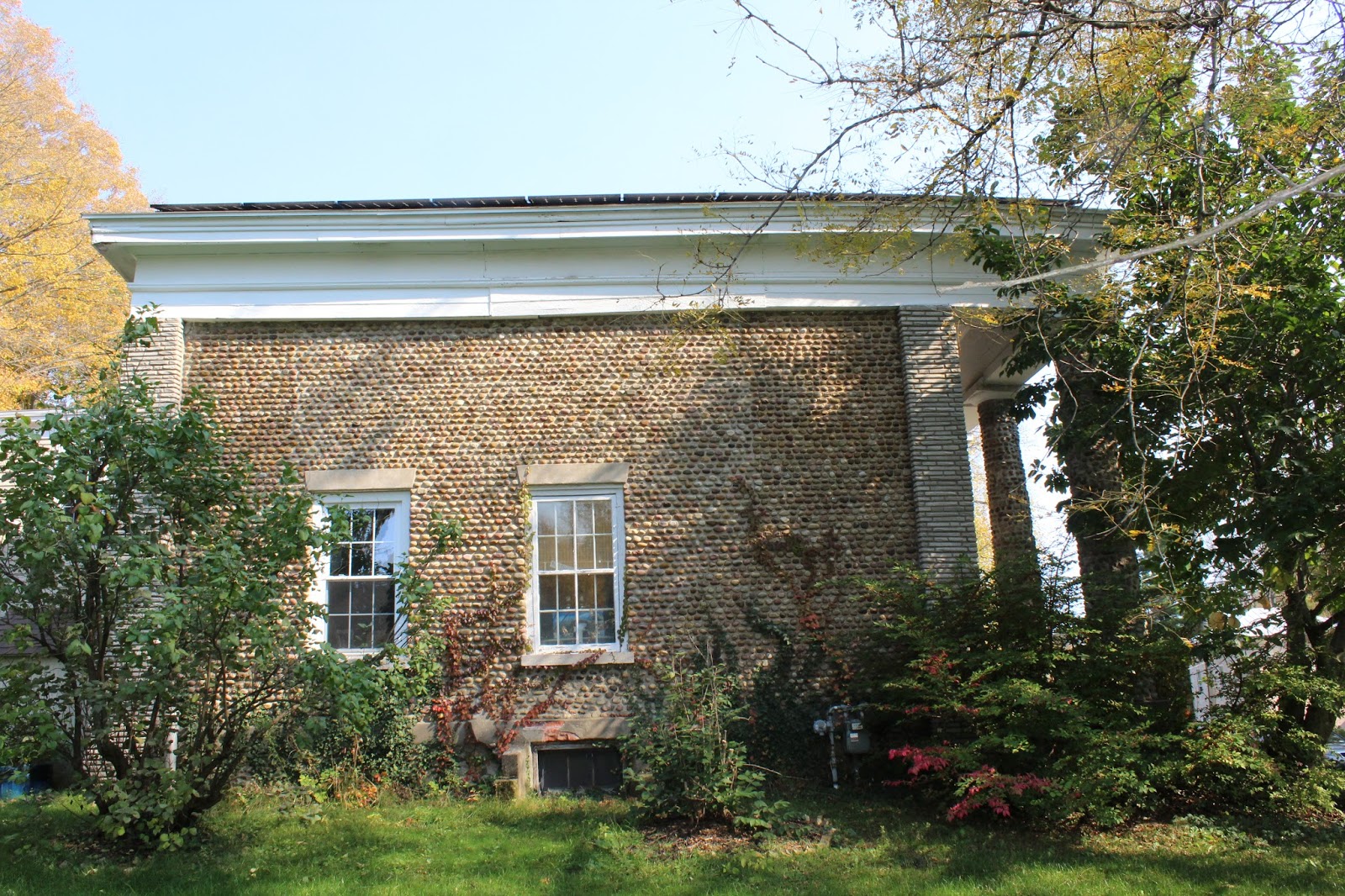
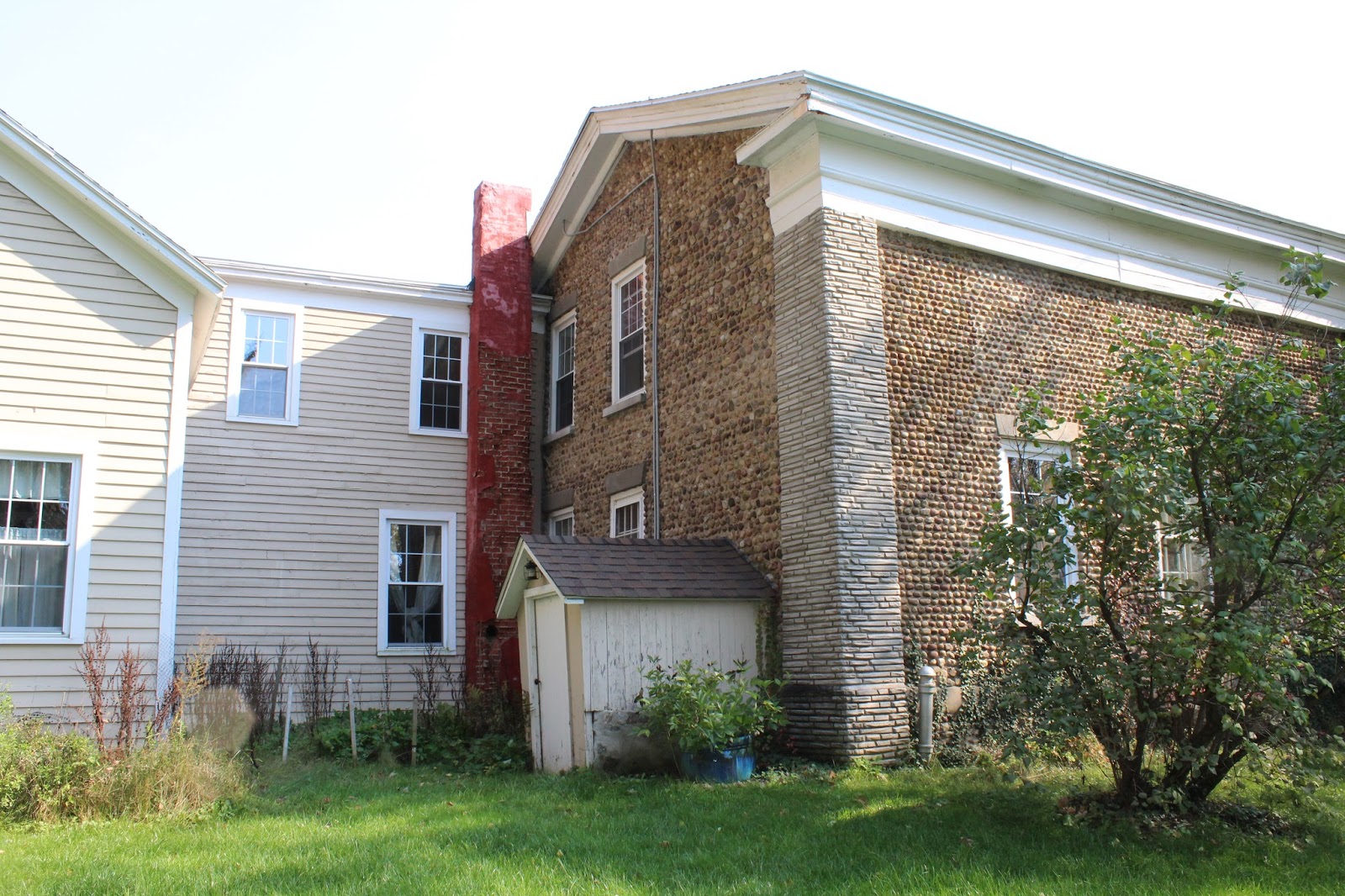
There is a two story cobblestone house on Main St., Holland Patent, with four round columns almost 2 stories high. The corners of the building are pilasters made from thin gray manufactured stones. In some areas, the surface pattern on the stones is repeated, showing that they were cast in the same or similar molds. The cobblestones are of various colors and are smooth and rounded. They appear to be set in mortar like that described on the side of One-2. In this building, the mortar shows more weathering than the house at Marcy, which is only 6 miles away. Window lintels are gray limestone. The columns on the front porch are outstanding features, but close examination suggests that they are not free formed, but that the stones have been placed around circular wooden columns. Stones are laid in different manners in each column, and in some instances it is apparent that they were not constructed at the same time. In some columns, it looks as if areas have been reconstructed, which does not appear to be possible unless the stones are veneered on wooden columns. Roudabush Survey page 77.
This house at 9399 Main St., (Route 365) Holland Patent, was built in 1841 by mason William J. Babcock for Gardner Townsend. It appears to be the only example of a Greek Revival house in America with columns made of cobblestone. It has long been known locally as "Cobblestone Villa." To construct the columns that support the triangular pediment cobblestones were applied to logs. The sides and rear of the house are authentic Greek Revival except for the more modern flat stones that may cover the original quoins. Richard Palmer blog.
"The Cobblestone Houses of Upstate New York", compiled by Dorothy Wells Pease. Research done in collaboration with Hazel B. Jeffery, supplemented with material furnished by Carl F. Schmidt, 1941. Reference the fifth paragraph on page 42.
Permanent File of Cobblestone Structures.
"The Geological Origin of Cobblestone Architecture", by Gerda Peterich. Specific reference to this structure on page 18.
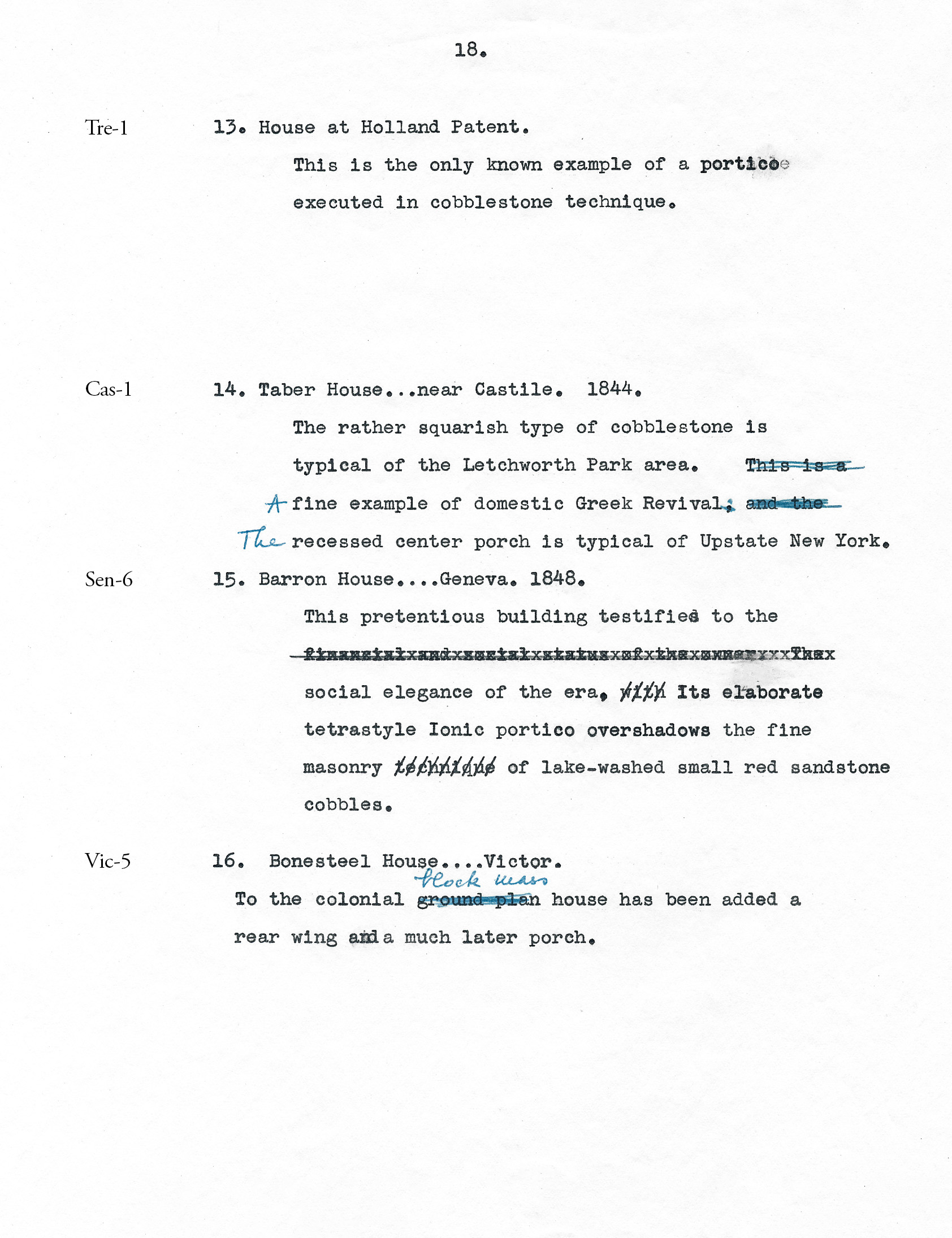
"Cobblestone Architecture in the Rochester Area", by Gerda Peterich, 1953. Reference Cobblestone Villa and figure 56. Editor's Note: This digitized version of the original typescript manuscript is reformatted for digital display, edited for errors, and includes blue tinted highlighted links to improve access within the document, to the appropriate structure pages in the Cobblestone Info Base, or to external resources on the internet. This document is one of two known typescript drafts, likely a thesis or essay bound as a book and apparently never published. One is available in the Cobblestone Museum Resource Center, the other in the University of Rochester Art and Music Library. A companion or precursor typed paper of the same title exists, perhaps used for a talk and/or photographic display of cobblestone structures.
- "Cobblestone Architecture of Upstate New York", by Gerda Peterich, Journal of the Society of Architectural Historians, Vol 15, Issue 2 1956, Page 16. By permission of the University of California Press, "The requested material is in the public domain and you are welcome to use it."
- "Cobblestone Masonry", 1966, Carl Schmidt: Name reference, Rawson House
- Page 89
- "Cobblestone Landmarks of New York State", 1978, by Olaf William Shelgren, Jr., Cary Lattin, and Robert W. Frasch, Photographs by Gerda Peterich: Name reference, House
- Pages 158 - 159
- "The Era of Cobblestone Architecture", unpublished manuscript 1972. To access the manuscript content about this structure, see 57. Oneida County, Canfield (?)-Rawson House.
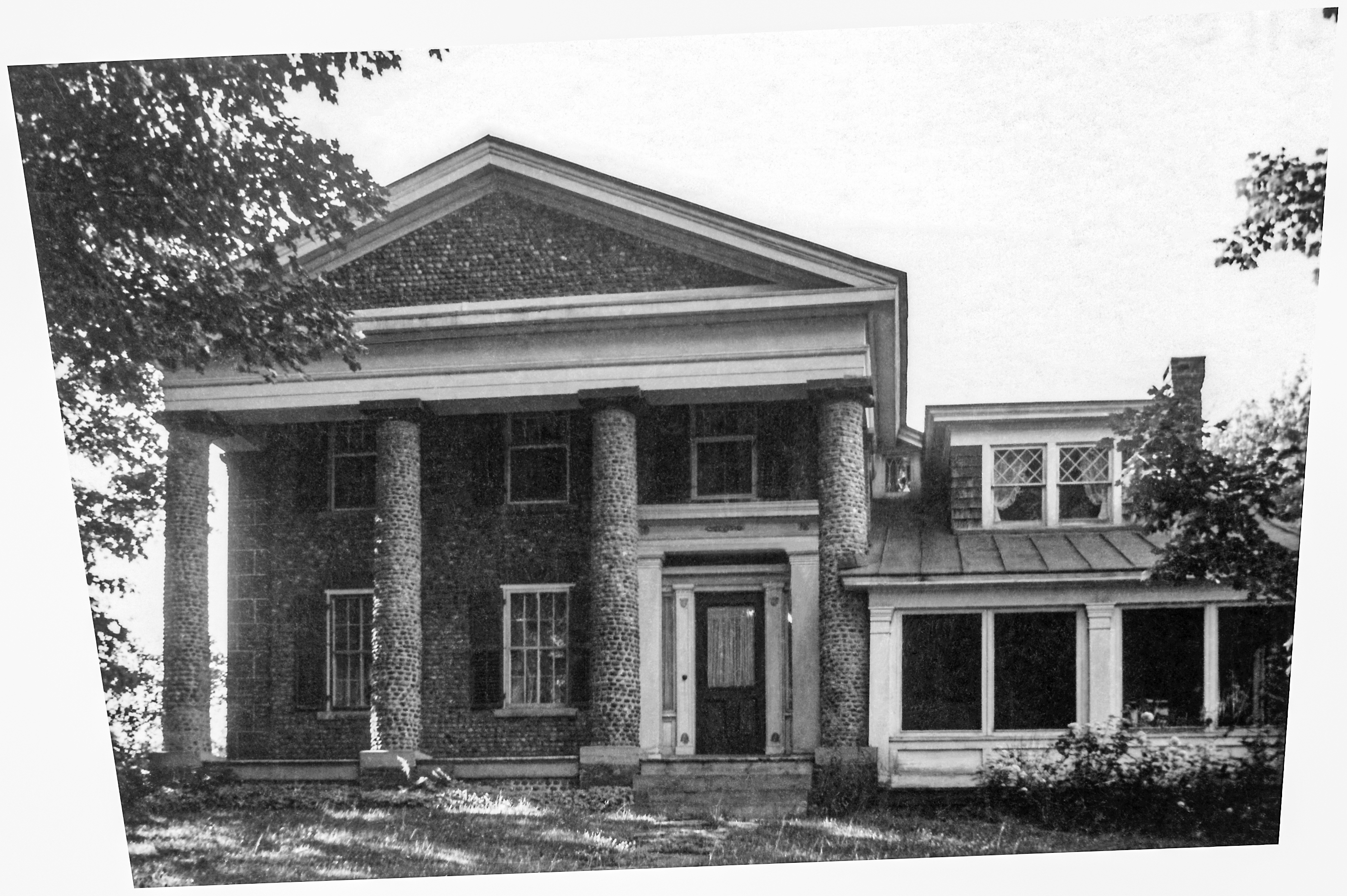
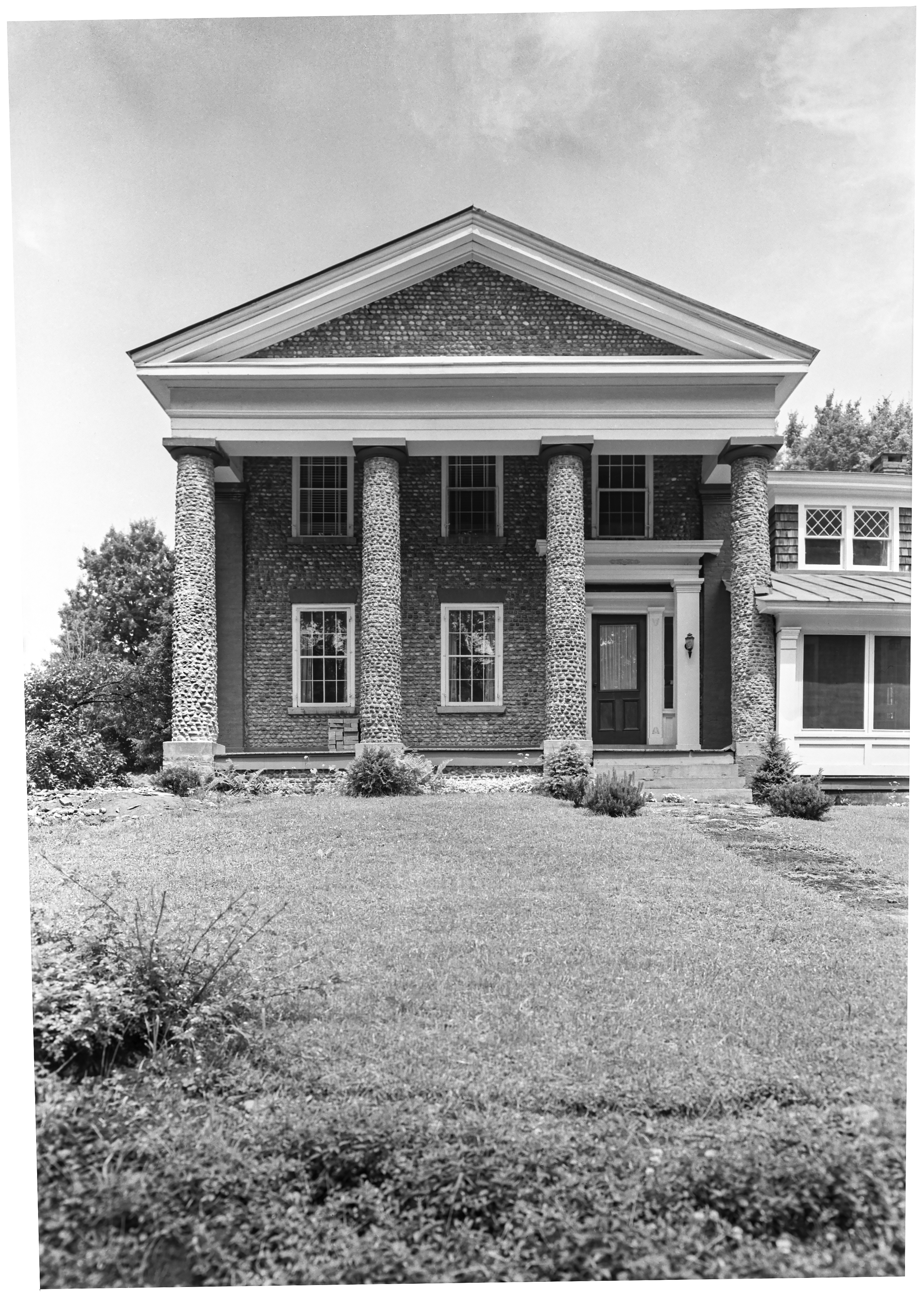
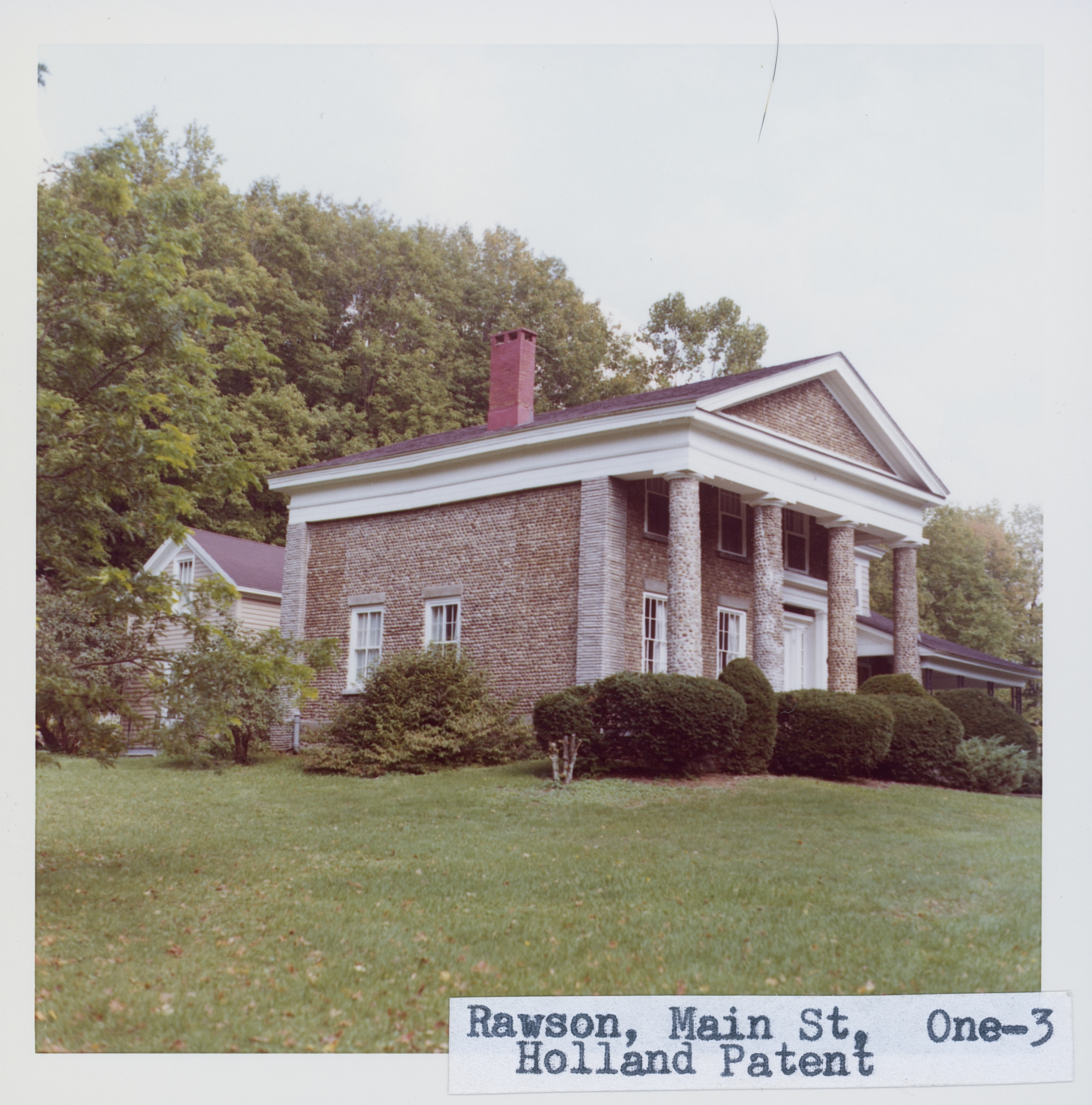
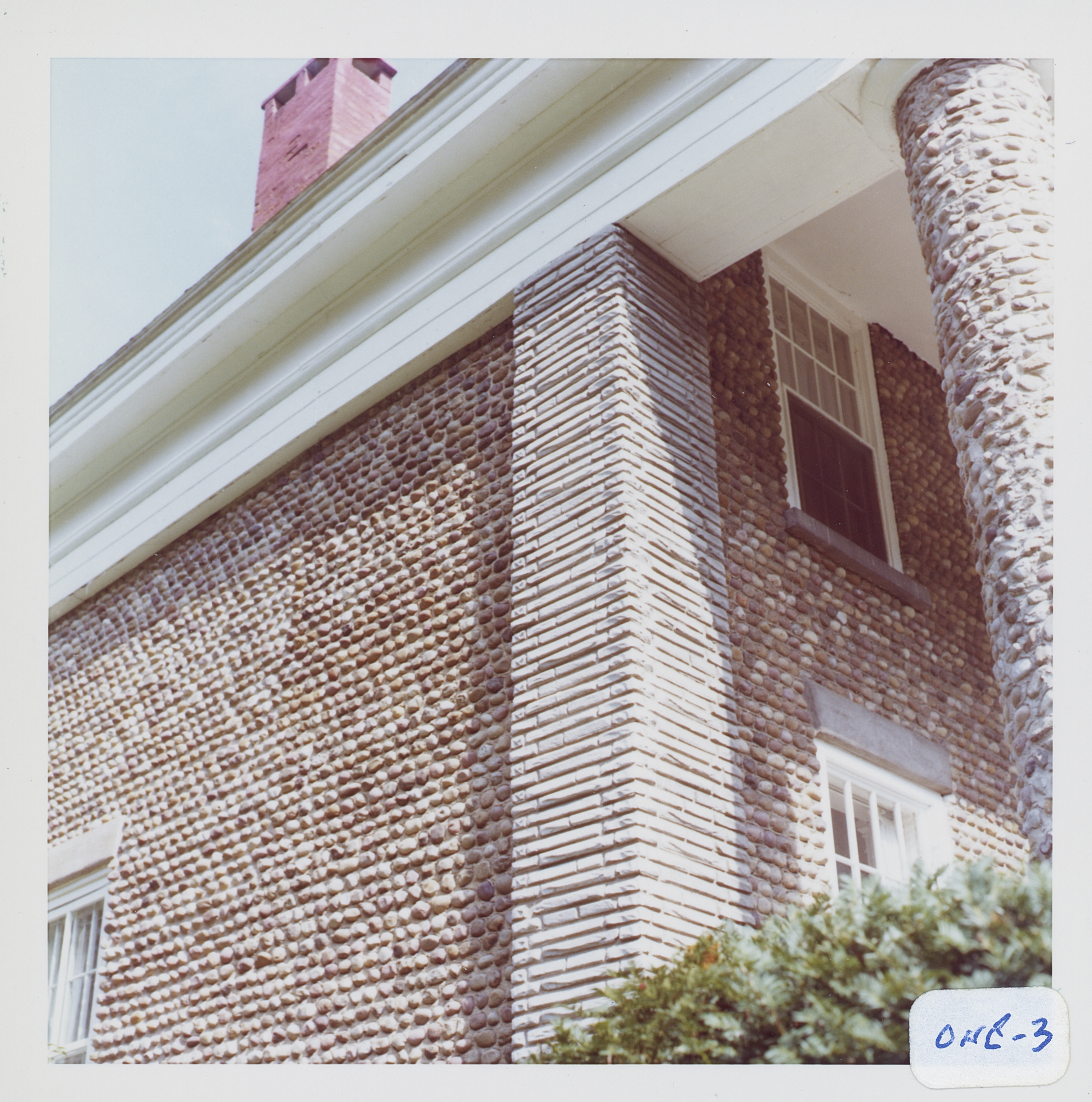

¹ Image courtesy Cobblestone Museum.
² Photography courtesy Gerda Peterich. Cobblestone Museum.
³ Photography courtesy Martin and Sheila Wolfish.
4 Photography courtesy Richard Palmer.
